Huntington University’s SGA plan and execute an annual Spring Formal to build student community through a mystery masquerade-themed night.
By Ellen Batty | March 30, 2026
Under dim candlelight, surrounded by jewel-toned décor and masked faces, students at Huntington University step into a world away from lectures and late-night study.
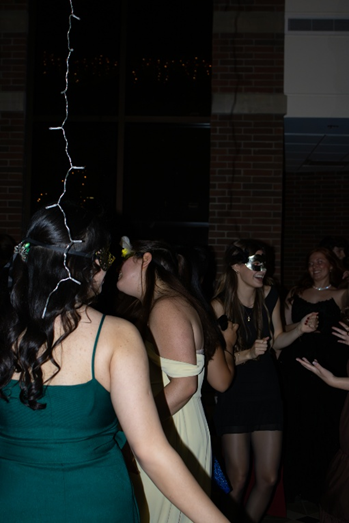
The annual Spring Formal hosted by the university’s Student Government Association (SGA), offers students formal dance each spring designed to build community and provide a break from classes. This year’s “mystery masquerade” theme—chosen by the student body—combines theatrical elegance with student’s favorite music to create an impactful night for all students of HU.
But while the night itself felt effortless, the transformation from science hall to masquerade ball was anything but. It required detailed planning, collaboration, and intentional decor from the SGA board working behind the scenes.
At Huntington University, the Spring Formal is more than just a dance, it’s a direct reflection of the care and hard work SGA puts into student life.
For one night, the Science Hall transforms into something almost unrecognizable. Candlelight flickers across tables draped in deep jewel tones. Feathers, vintage books, and strands of glowing lights create an atmosphere that feels less like a lecture hall and more like a masquerade ball. Students arrive in suits, dresses, and custom masks, stepping into a night designed to feel elegant and to build community.
“It’s one big evening where we have lots of dancing . . . a photo booth, and just a good time just to kind of cut loose,” said Spring Formal committee chair Emily Adams.
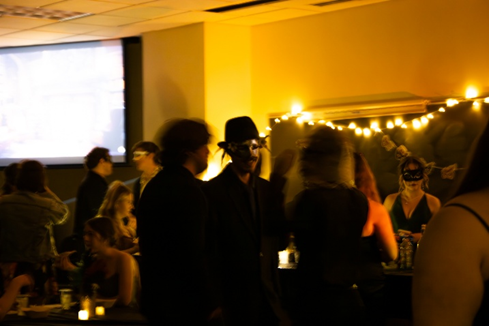
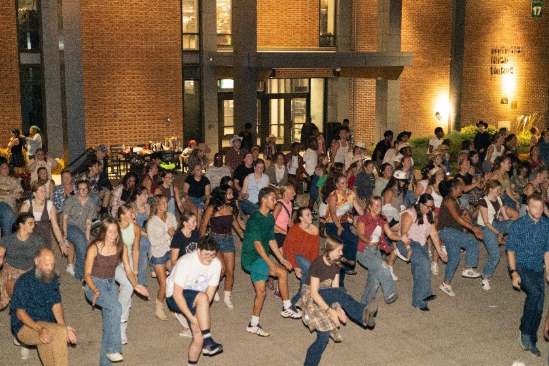
Held annually, the Student Government Association’s Spring Formal gives students a chance to step away from academic pressures and lectures to celebrate the semester together. For SGA Vice President Matthew Nasir, the event creates a much-needed break from the business of college life. “We all just kind of have a celebration of the semester and of our time here at HU,” he stated. “It’s a really, really nice time to unwind from the regular schedules we have.”
This year’s theme, “mystery masquerade,” was selected by the student body after a poll was sent out. While SGA members initially favored other ideas, the students’ love for the theme made the decision clear. “Mystery masquerade actually won by a large margin,” Nasir said. “We were a bit surprised, but pleasantly so.”

For committee member Dakota Collier, the theme opened the door to theatrical inspiration. “We’re kind of thinking like Phantom of the Opera vibes,” she said. “It’ll be obviously masks . . . candlelight . . . old vintage books . . . big feathers.” The color palette reflects that same elegant, yet dramatic theme. “All of our colors are like gem colors—emerald, kind of a rich purple . . . black and gold . . . deep maroon, red-type colors.”
Bringing that vision to life in a widely-used academic building was part of the challenge— and the fun. “The Science Hall is a bit of an unconventional venue,” Adams explained. “It’s kind of just a fun challenge to figure out what makes you feel like you’re not in an academic building.”
That transformation doesn’t happen overnight, though. Behind the scenes, the planning and decorating process is complex and a lot of hard work. “It’s very detail-oriented,” Nasir said. “All the little things you wouldn’t necessarily think about . . . everything that goes on the table . . . how many tables we’ll need.”
Collier noted that scheduling was one of the biggest hurdles. “Trying to pick a date was extremely challenging,” she said. “There’s so many sports going on and so many activities.”
The committee worked around campus events and athletic schedules to find a time that allowed as many students as possible to attend, listening to fellow SGA members about sports schedules. At the same time, they balanced other SGA responsibilities, making time management a key part of the planning process.
Budgeting also played a significant role. In recent years, SGA has made a conscious effort to keep the event affordable. “We ended up lowering the price by 75%, making it $5 for a ticket,” Adams stated. While the ticket cost helps offset some expenses, it doesn’t cover everything.
“It’s . . . a way for us to recuperate some of the funds we spend,” Nasir explained, noting SGA takes a financial loss to create this unforgettable night.
Much of that budget, however, goes toward creating an immersive environment for students to step into. “Decorations will take a large portion of the budget,” Nasir said.
Even small details add up quickly. “The feathers weren’t cheap . . . I think it was like $9 a pack,” Collier added.
This year, the team also invested in new decorations, including an updated backdrop, to keep the event feeling fresh and separate from previous dances.
Despite the challenges, SGA consistently returns to the same goal: to create a space where students can connect and enjoy being together.
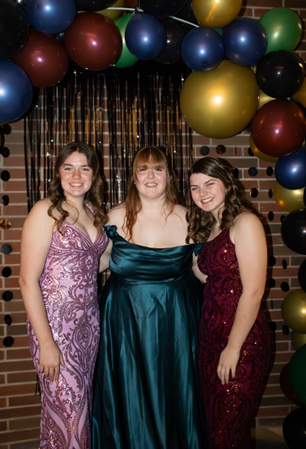
“I think it’s important because it just gives them a venue to have . . . good, clean fun,” Adams remarked. She noted that events like this can lead to deeper relationships. “It opens the door to making these good friendships where it’s like, ‘Oh, I don’t have to hide anything.’”
Nasir sees these events as essential to the college experience. “We can study, and then we can also take time to enjoy the community,” he said. “Our education and our holistic development aren’t at odds.”
For Collier, the value is in community creation. “If we don’t have activities where we can have fun, we’re not going to have a good community,” she remarked. “I think a bunch of people will just be able to come together and have a good time.”
Sometimes, it’s the smaller details that make the biggest impression. For Nasir, “It’s really nice seeing people get excited about what they’re gonna wear,” he said.
Collier added, “Emily’s been hyping up those Ziano’s breadsticks . . . I’m really excited to try those.”
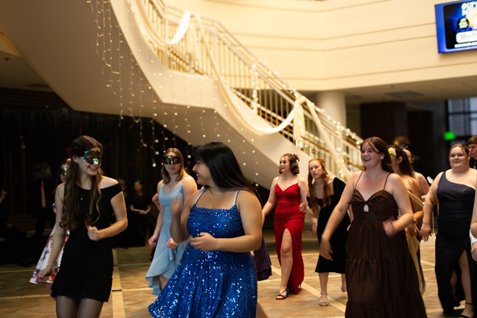
At the heart of it all is a shared vision among the SGA members. “I just hope they have a good time,” Collier said.
Nasir agreed, “I hope they spend time with people they love…and I hope they bust a move.”
For Adams, “Seeing students get to enjoy it and just engaging community in the spaces my team worked hard to create” is motivation enough to keep working hard to build student life.
About The Author